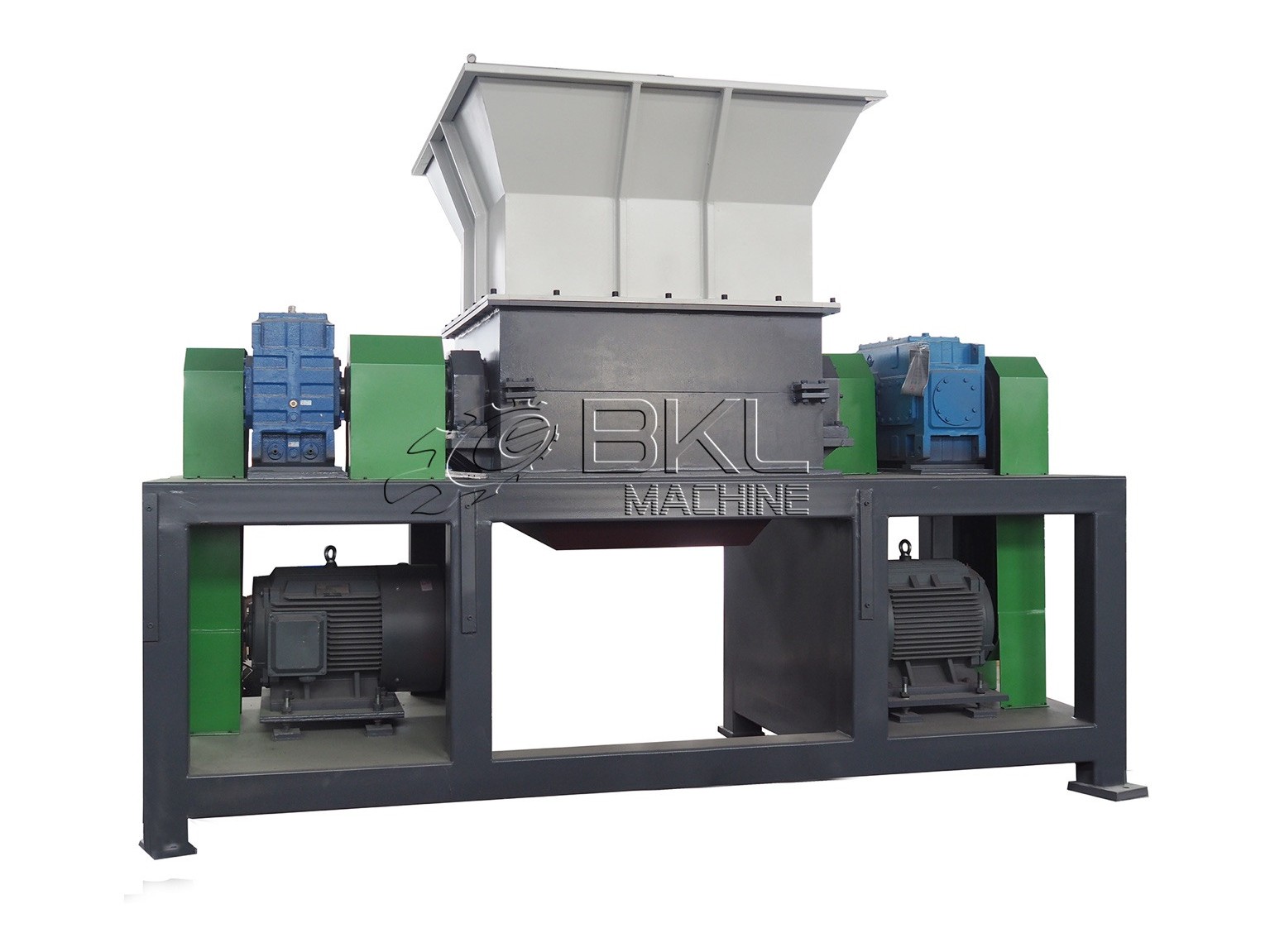
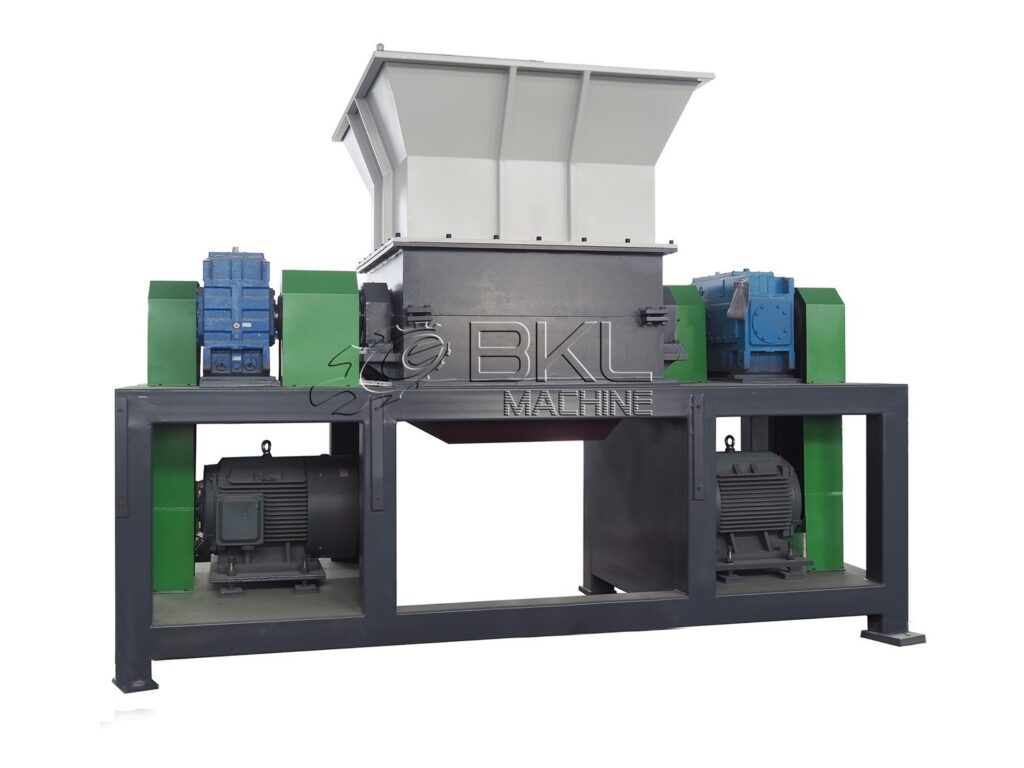
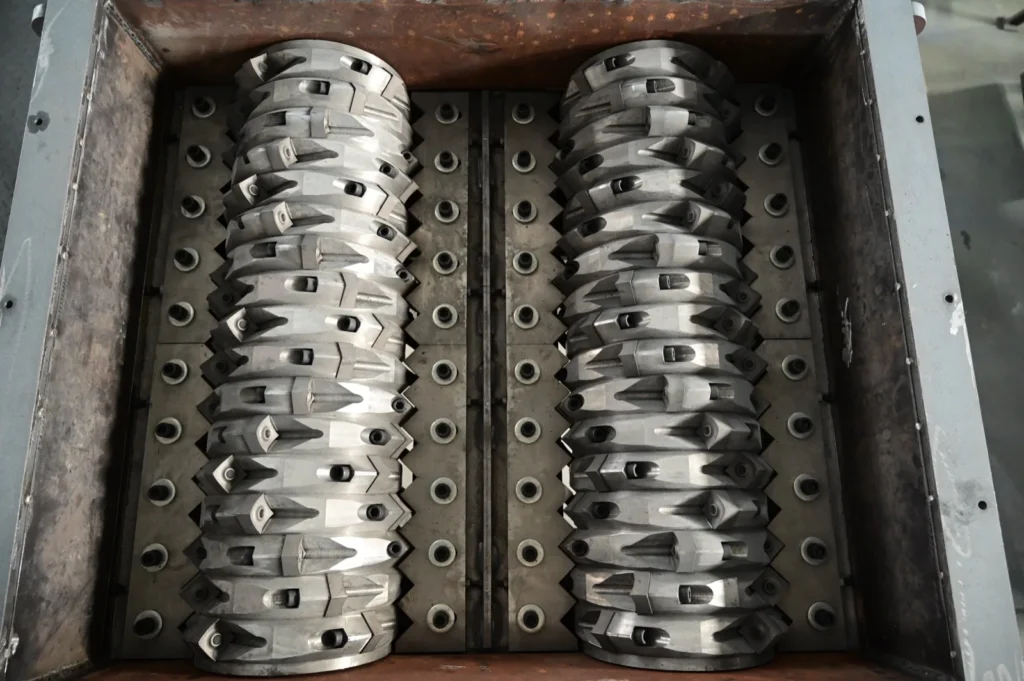
Twin-shaft tire shredder application for scrap tyre rough size reduction, 400-4,000 kg/h depending on tyre type and configuration.
Product Description
Tire shredder for scrap tyre size reduction
A tire shredder reduces whole scrap tyres to 50–150 mm chips using two counter-rotating shafts at 8–15 rpm. BKL supplies the shredding stage on a DS twin-shaft platform. Wire separation, secondary granulation, fibre removal and rubber powder screening are downstream processes needing additional specialty equipment, and we would rather say so at the top of the page than after a quotation.
What follows is what actually changes when you feed tyres into a shredder instead of plastic, and what that means for the machine you buy and the cost of running it.
What makes a tyre different from plastic
Three properties separate a scrap tyre from every other feedstock a shredder normally sees, and each one drives a design decision.
It is elastic. Plastic fractures or shears. Rubber deforms, absorbs the blow and springs back. A blade that would slice through an HDPE drum can push into a tyre wall and simply be pushed out again. Cutting rubber needs a tooth that penetrates and grips rather than an edge that slices.
It is reinforced. Most truck and passenger tyres carry steel belts under the tread and steel bead wire in the rim seat. The machine is not cutting rubber, it is cutting a rubber-and-steel composite — and steel is what destroys tooling.
It is heavy and awkward. A whole truck tyre is a large, rigid, round object that does not fall neatly into a hopper and does not stack. Feeding is a real design problem rather than a detail.
Why low speed is not optional here
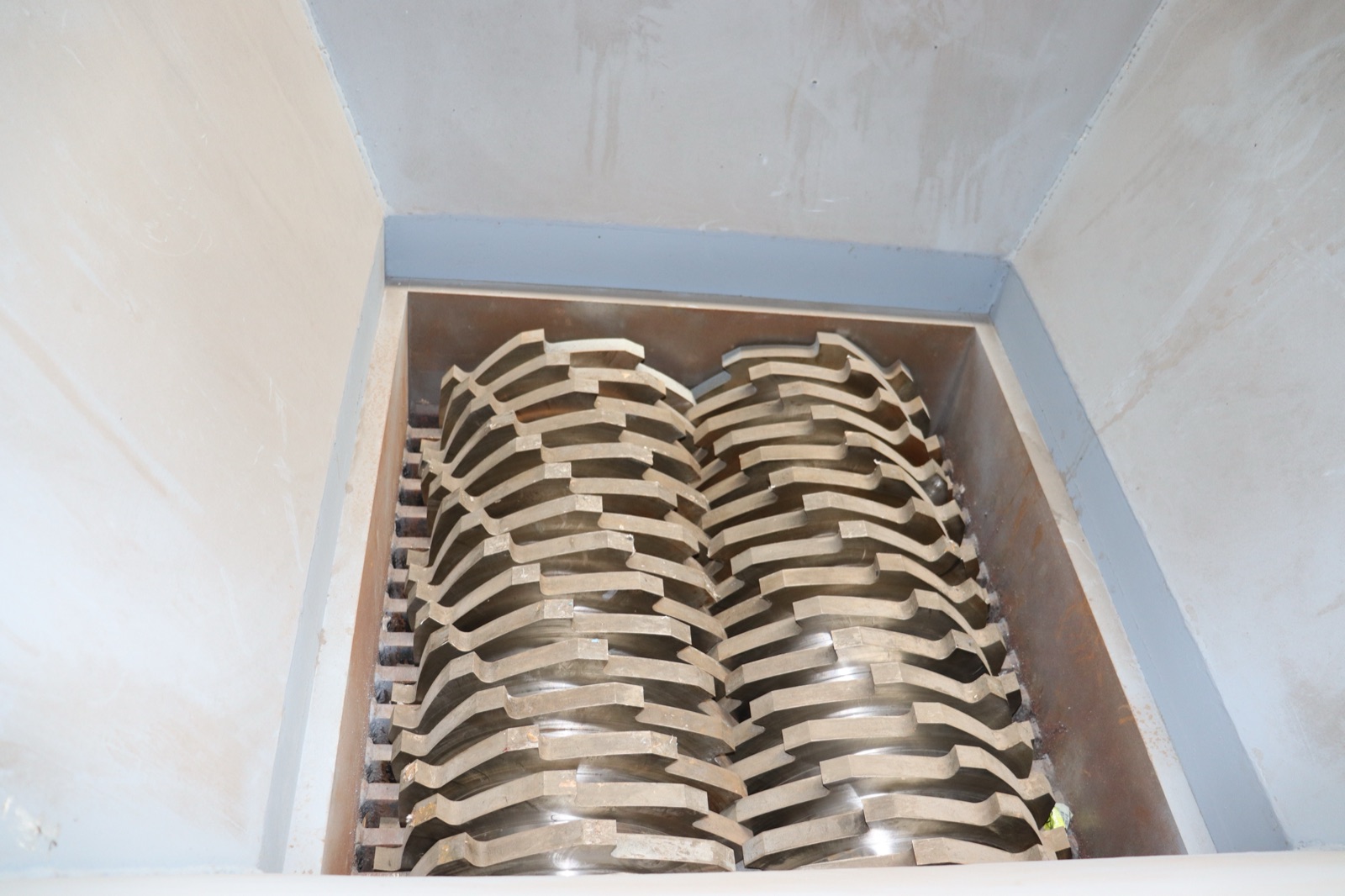
The rotors turn at 8–15 rpm. On plastic that speed is a design preference; on tyres it is a requirement, for three reasons that compound each other.
High speed slips. A fast blade skids across elastic rubber instead of biting into it. Slow, high-torque hooks penetrate and pull.
High speed heats. Friction against rubber generates heat quickly, and hot rubber becomes tackier and more elastic — the opposite of what you want in a cutting chamber. Heat also degrades the material you are trying to sell.
High speed cannot survive steel. A steel belt struck at several hundred rpm chips or breaks a blade. Struck at 12 rpm under high torque, it is sheared or the machine stalls — and stalling is recoverable.
That last point is why automatic reverse matters more on tyres than on anything else. The PLC watches motor current; when the load spikes on a bead wire or an undersheared belt, the drive stops, reverses to back the obstruction out of the mesh, then resumes. On tyre work that cycle runs many times a shift, and it is the difference between a machine that keeps running and one that needs an operator with a crowbar.
Steel-belted or not: the decision that drives everything else
Before anything else is specified, establish what proportion of your feedstock carries steel. It changes the tooling, the running cost and the whole downstream plant.
| Tyre type | Knife choice | Downstream note |
| Non-steel tyres | 9CrSi or D2 depending on use | May go directly to second reduction |
| Steel-belted tyres | D2 or tungsten carbide | Steel separation is required after shredding |
Non-steel tyres — bicycle, motorcycle, some agricultural and solid tyres — are, from the machine’s point of view, tough elastic plastic. Standard alloy tooling handles them and the chips can often go straight to a second reduction stage.
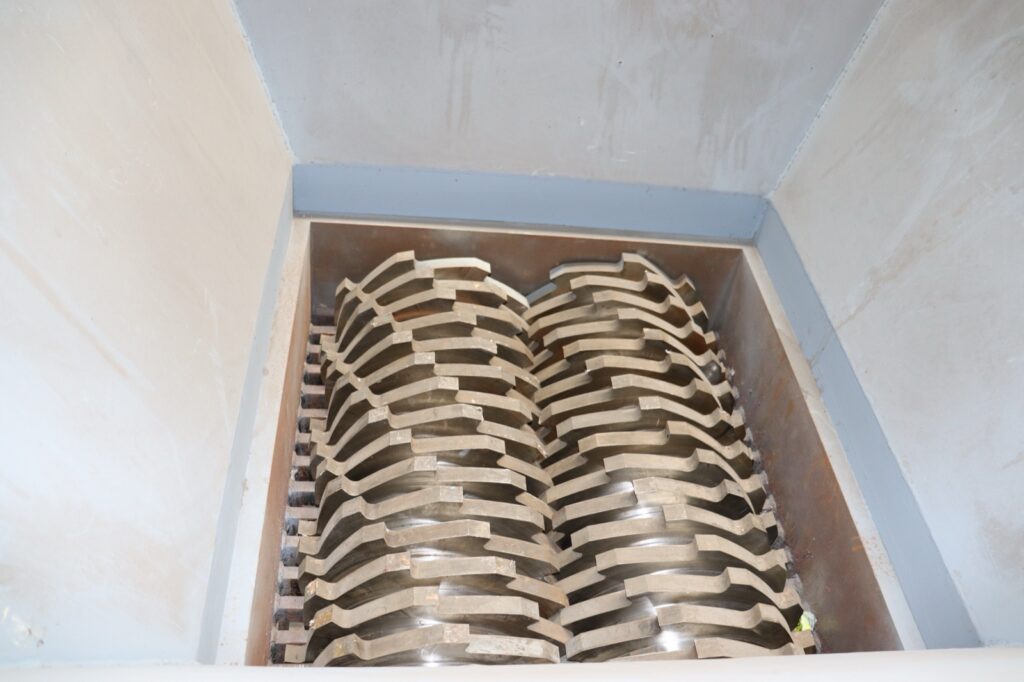
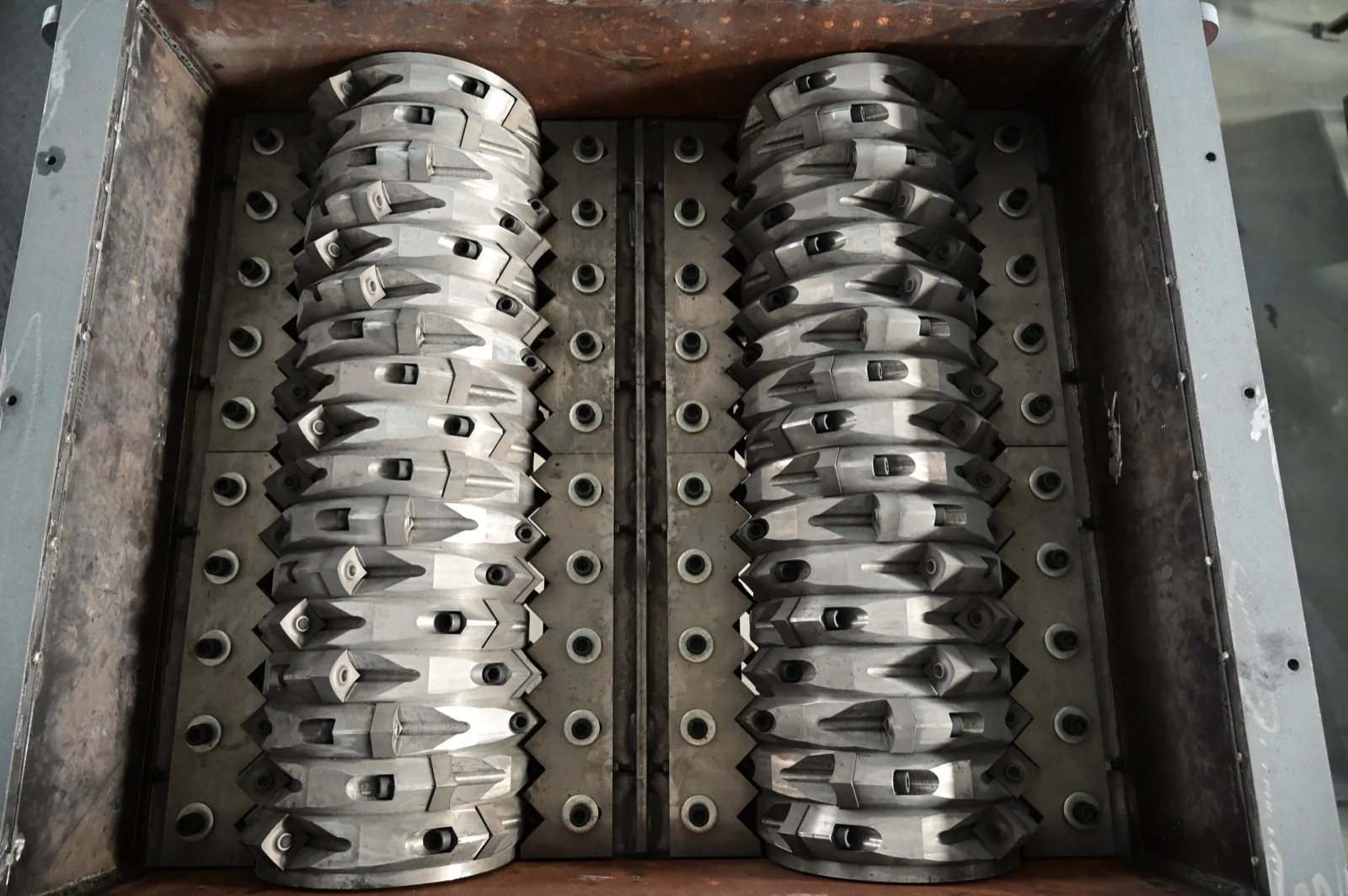
Steel-belted tyres are a different job. Carbide-tipped teeth are the appropriate grade, as in the photograph above, and even those wear against belt wire. Everything after the shredder changes too: you now have steel in your chip stream and a magnetic separation stage becomes mandatory rather than optional.
What comes out
A primary tyre shredder produces rough chips of roughly 50–150 mm, depending on shaft design and on the screen or downstream setup. That is a shred, not a granule.
It is worth being clear about the gap between that and the products people usually have in mind. Tyre-derived fuel takes chips in roughly this range and is the shortest route to a saleable product. Crumb rubber for sports surfaces and moulded goods needs granulation to a few millimetres, plus fibre removal. Fine rubber powder needs finer milling and screening again. Each of those is a separate plant after the shredder, not a setting on it.
Choosing a model by tyre type
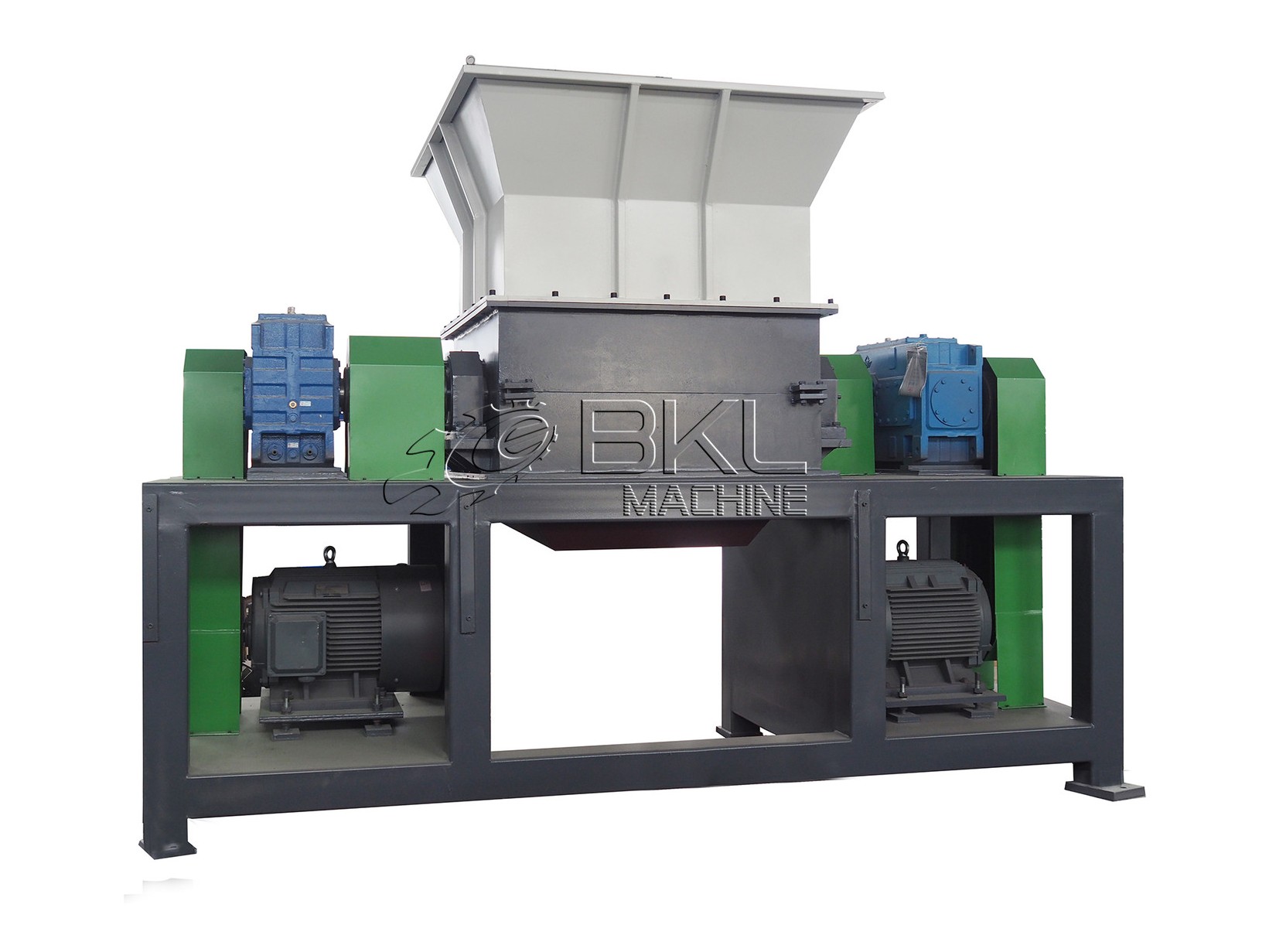
| Model | Motor | Capacity | Best fit |
| DS600 | 15 kW x 2 | 400-600 kg/h | Motorcycle or bicycle tyres |
| DS1000 | 37 kW x 2 | 1,000-1,500 kg/h | Passenger tyres |
| DS1600 | 75 kW x 2 | 3,000-4,000 kg/h | Truck or engineering tyres after feeding review |
Two notes on reading this table honestly.
Quoted capacities are the plastics-duty figures for the DS platform. Tyres are denser and tougher than the mixed plastic these bands were measured on, and a steel-belted feed will sit at the lower end. Treat them as a way to compare models against each other rather than as a guarantee for your material.
“After feeding review” on the DS1600 is not a formality. Truck and engineering tyres are physically large and stiff, and whether one enters the chamber at all depends on rotor diameter against tyre diameter. That is a geometry question we check before quoting, and sometimes the answer is that the tyres need pre-cutting.
Knife wear is the running cost
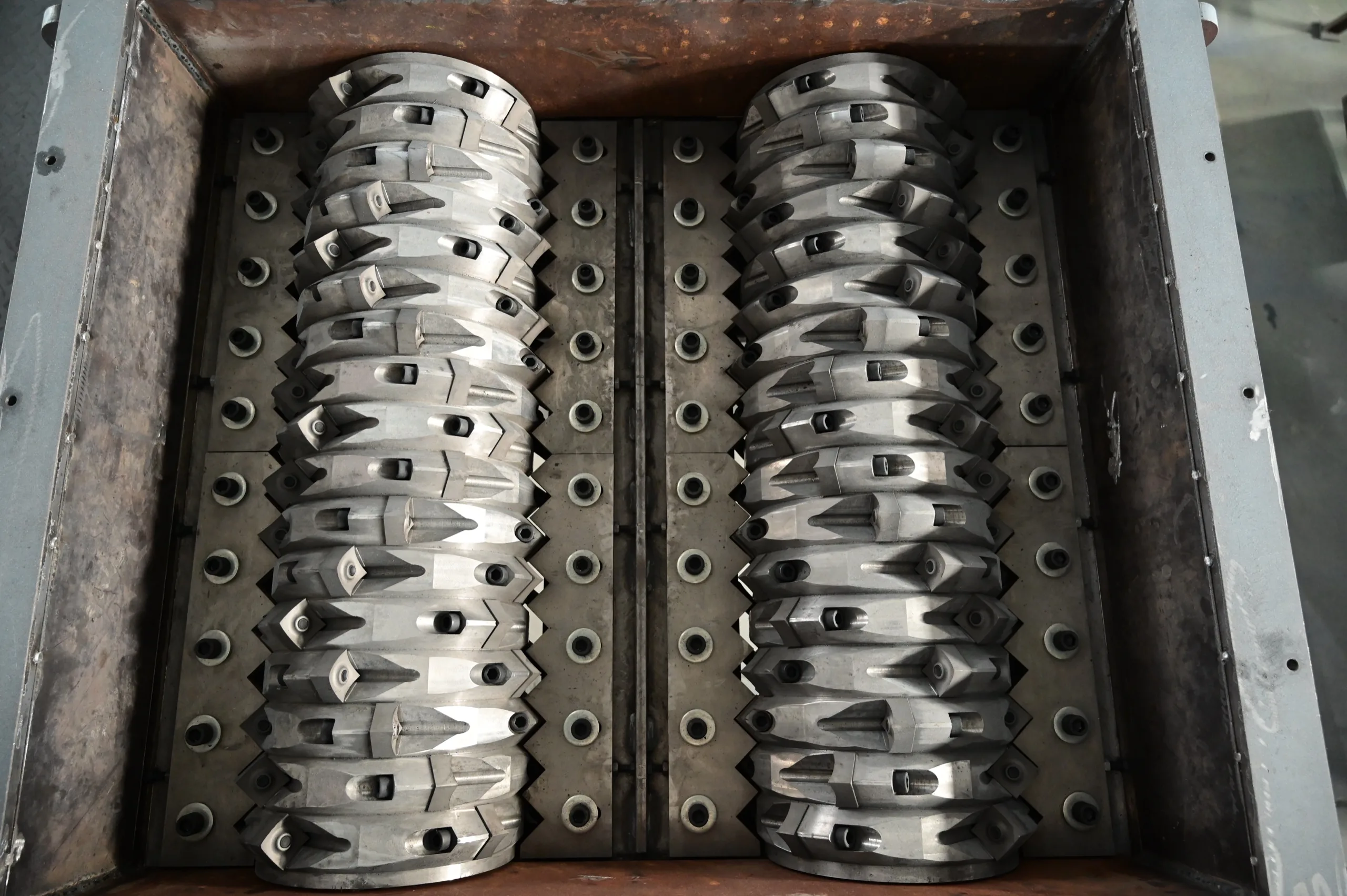
On a plastics shredder, blades are a maintenance item. On a tyre shredder they are an operating cost, and the single largest variable in the economics after electricity.
Steel belt wire wears tooling far faster than any plastic. Three things follow that should be settled before the machine is quoted, not after:
Blade material against your actual feedstock. Carbide costs more per tooth and lasts longer against steel; alloy grades are cheaper to replace and more forgiving of shock. Which is cheaper per tonne depends on your tyre mix, not on which is the better steel.
Spare tooling on the shelf. A shredder waiting for teeth is a plant that has stopped. Because tooling on this duty is consumed rather than merely worn, spares are a stock item.
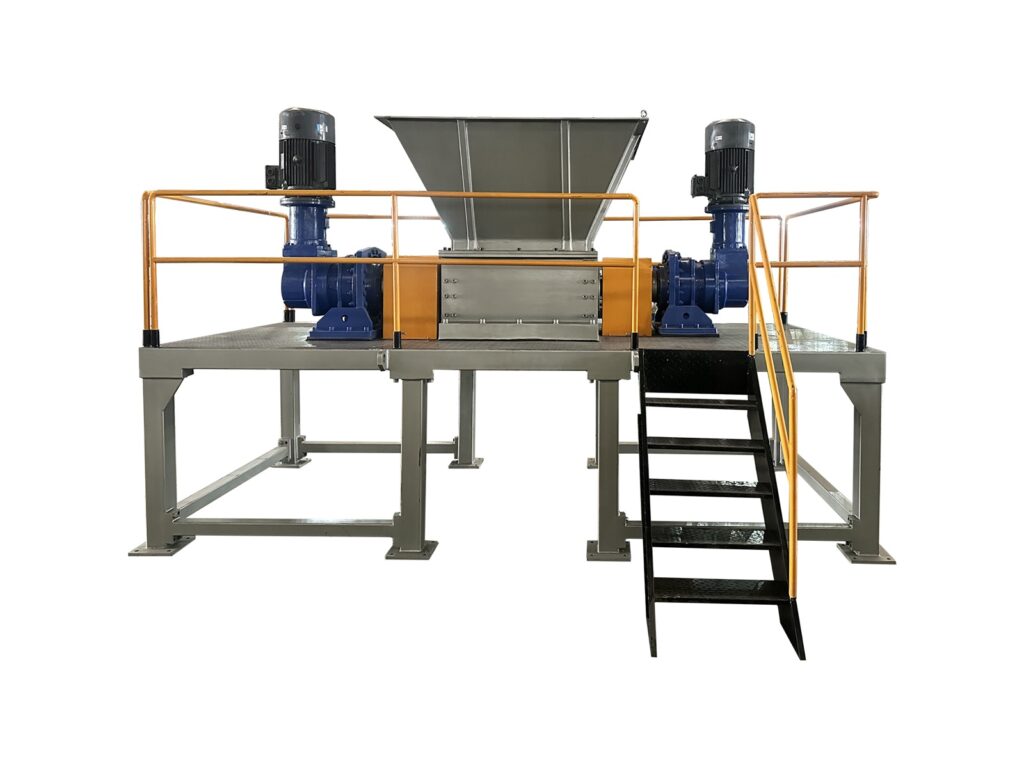
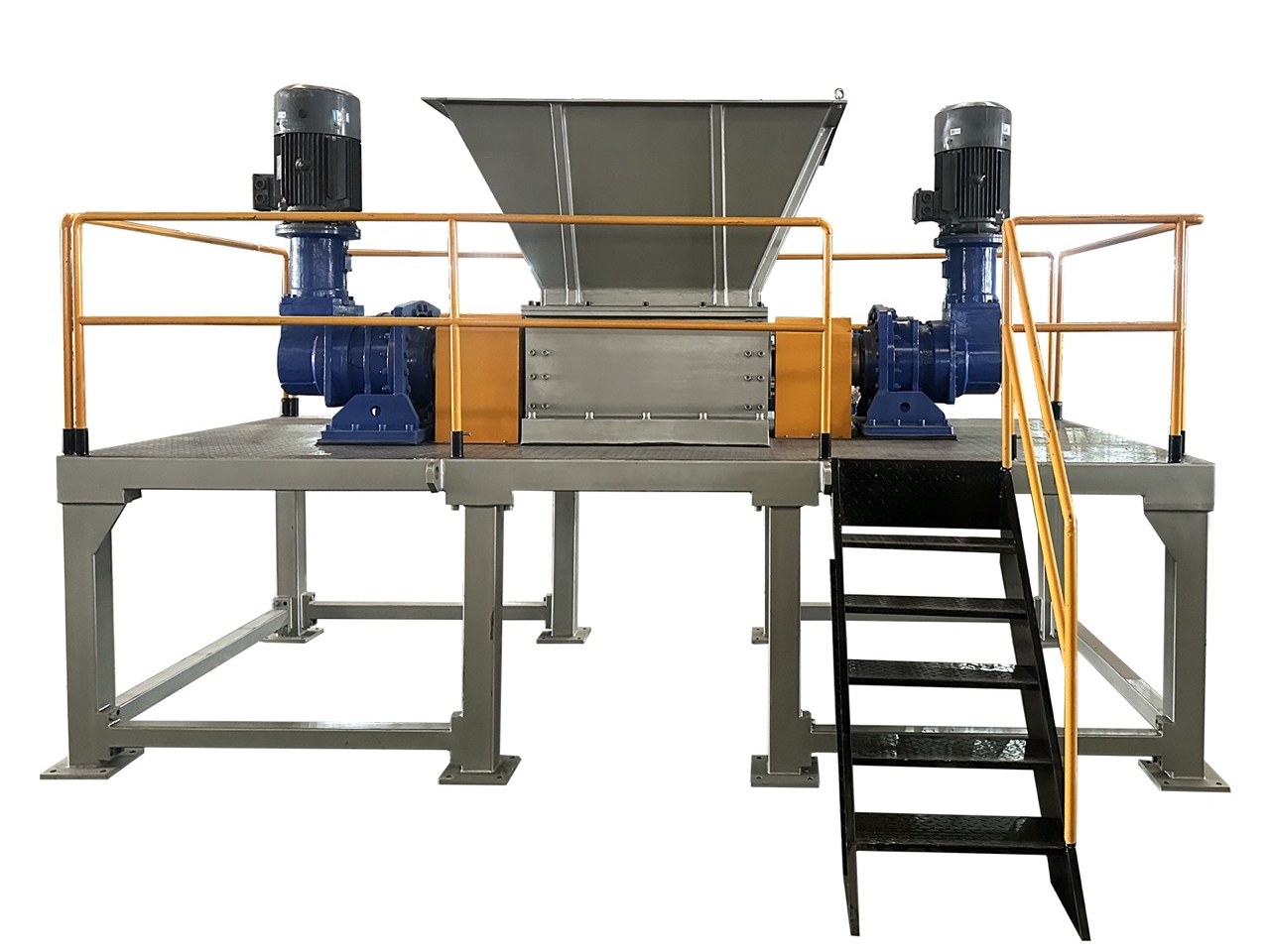
Maintenance access. Changing teeth on a machine at floor level with no platform is slow work. The raised-frame arrangement shown above exists for this reason.
Where we stop, and what you still need
BKL covers the rough shredding stage. A complete tyre recycling plant also needs steel separation, secondary granulation, fibre removal and rubber powder screening, and those stages should be planned separately if your target is crumb rubber or rubber powder.
We would rather scope this accurately than sell you a machine that turns out to be one component of a plant you were not budgeting for. If chips are your product, the shredder may be all you need. If crumb rubber is your product, the shredder is the first of four or five capital items.
Is tyre shredding a viable business?
It can be, and the answer turns on five numbers rather than on the machine.
Feedstock supply and gate fees. In many markets you are paid to accept scrap tyres. That gate fee is often a larger revenue line than selling the output, and it is also the one most exposed to local regulation.
Energy. Shredding tyres is energy-intensive per tonne compared with plastic, because you are cutting a composite.
Steel separation. Recovered belt wire has scrap value, but capturing it needs equipment and it will not be clean.
The rubber outlet. Chips into tyre-derived fuel is a low-price, high-volume market with real logistics costs. Crumb rubber sells for considerably more but needs the downstream plant described above.
Tooling and maintenance. Discussed above — and the line most often left out of a first business case.
Buyers who work through those five before ordering tend to be the ones still running three years later. The shredder is one cost centre, not the business.
See the platform machine running
Frequently asked questions
How does a tire shredder work?
A tire shredder uses low-speed counter-rotating shafts to grip and tear scrap tyres into rough chips. The machine relies on torque and automatic reverse protection rather than high cutting speed, because rubber is elastic and steel belting would destroy fast-moving tooling.
How much does a tire shredder cost?
The cost depends on tyre type, steel content, required capacity, blade material and downstream equipment. BKL quotes after confirming whether the project is only rough shredding or part of a larger tyre recycling process, because those are very different scopes of supply.
Do you need to remove the steel bead before shredding?
For steel-belted tyres, bead and steel content affect blade wear and downstream separation. Some projects pre-cut or debead tyres; others shred first and separate steel later. The correct route depends on tyre size and final output — debeading protects tooling but adds a labour or machine step ahead of the shredder.
What output size does a tire shredder produce?
A primary tire shredder typically produces rough chips around 50–150 mm, depending on shaft design and screen or downstream setup. Fine rubber granules and rubber powder require additional equipment after the shredder; they are not a setting you can select on this machine.
What knife material do steel-belted tyres need?
D2 or tungsten carbide. Non-steel tyres run acceptably on 9CrSi or D2, but belt wire is abrasive enough that carbide-tipped teeth usually work out cheaper per tonne despite costing more per tooth. The right answer depends on the proportion of steel-belted tyres in your actual feed mix, which is worth measuring rather than estimating.
Can it shred truck and engineering tyres?
The DS1600 is the model for that duty, subject to a feeding review. The constraint is geometry rather than power: a large, stiff truck tyre has to physically enter the cutting chamber, and whether it does depends on rotor diameter against tyre diameter. Where it does not, tyres are pre-cut into segments before the shredder.
Is tyre shredding a good business to start?
Tyre shredding can be viable when feedstock supply, disposal fees, energy cost, steel separation and rubber outlet are all clear. The shredder is only one cost centre; buyers should calculate downstream sales and maintenance before investing. Gate fees for accepting scrap tyres are frequently a larger revenue line than the material itself.
Do you supply the complete tyre recycling line?
No. BKL supplies the shredding stage for scrap tyres on a heavy-duty shredder platform. Steel separation, fibre removal and rubber powder production require downstream equipment outside the standard BKL scope, and we will say so before quoting rather than after.
From your material to a running line
No day counts are promised here. Lead time follows the configuration and is confirmed in the quotation.
Send material details
What the material is, how it arrives, the capacity you need and the output you want to sell. Photos or a short video of the feedstock help more than a spec sheet.
You get back a first read on the process route
Engineering review
We check feeding method, process route and machine configuration against your material — not against a catalogue model number.
You get back an equipment list and a layout
Factory-direct quotation
Capacity, layout, voltage and automation level are priced against the project, direct from the workshop that builds the machine.
You get back a quotation with trade terms
Manufacturing and shipment
Production, factory testing, export packing and container loading, through to installation guidance and commissioning on your floor.
You get back test records and loading photos
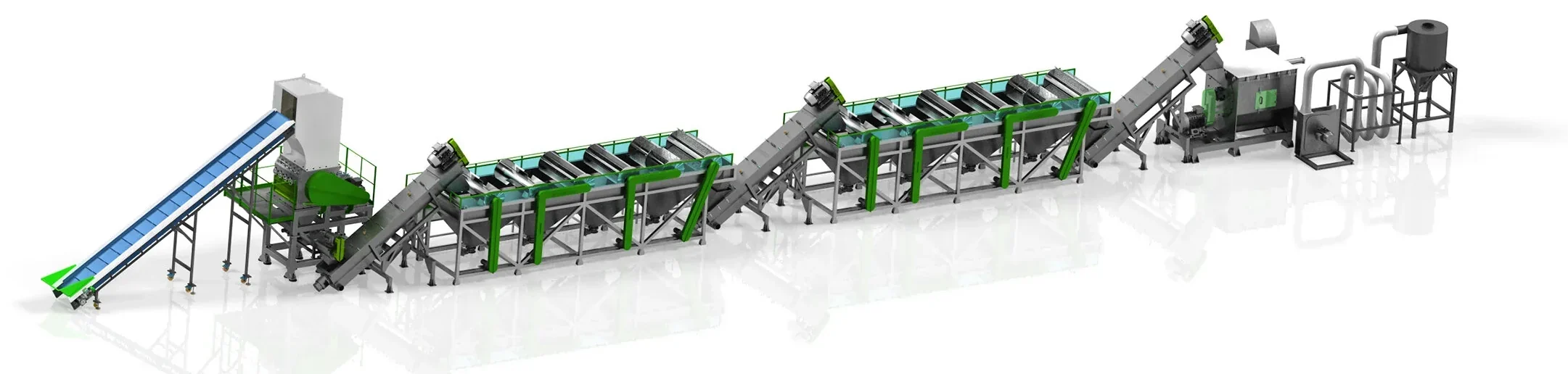
Built here, packed here, shipped from here
Leyu Town, Zhangjiagang, Jiangsu — inside the Suzhou and Wuxi manufacturing belt.
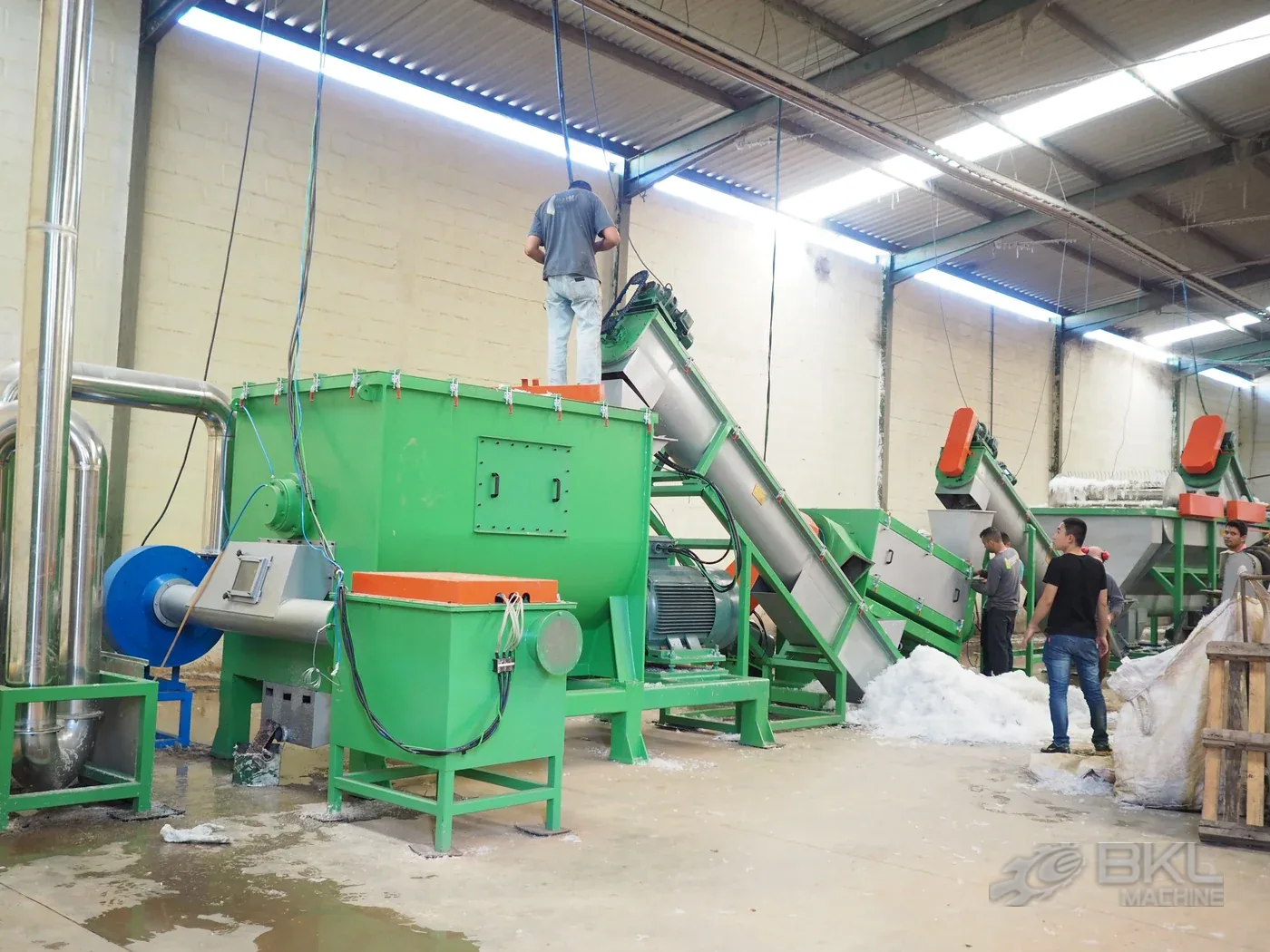
Built here
Fabrication, machining, welding and assembly all happen in our own workshop in Zhangjiagang. There is no trading layer between you and the people who align the rotor.
On file: A named workshop you can visit, not a trading address
Packed here
It runs before it is packed — with your own material whenever you can send it — and the run is recorded. Only then is it wrapped and secured for the container.
On file: Trial-run video, test record, loading photos
Shipped from here
The container is loaded at this address, not handed to a third-party warehouse. After it lands you get installation guidance and commissioning support, then wear parts at cost price once warranty ends.
On file: Loading confirmation, then cost-price knives and screens
Tell us the material, not the model number
Rotor size, motor rating and where this machine sits in your line all follow from what you are running and how dirty it arrives. Send us that, and the configuration comes back sized for it.
- 01A process route for your material — which stations it needs and in what order, this machine included.
- 02This machine sized to it — model, capacity band, motor rating and the throughput you can plan against.
- 03A quotation with trade terms, written by the engineer who reviewed the route, usually within one working day.
What sits either side of it
The stages this machine feeds and is fed by.
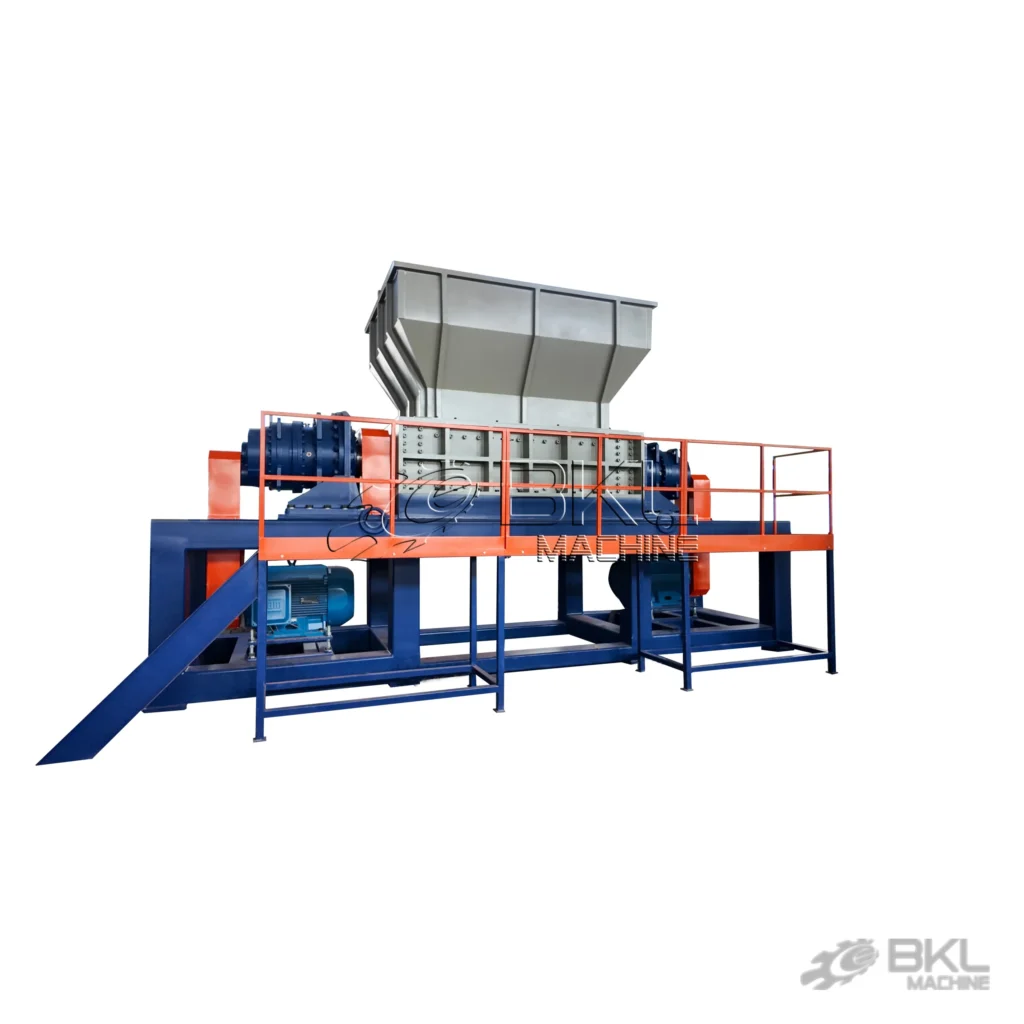
DS Twin-shaft Shredder (double-rotor)
Low-speed twin-shaft shredder for bulky plastics, tyres, pallets and mixed waste, using Siemens PLC control and 8-15 rpm...
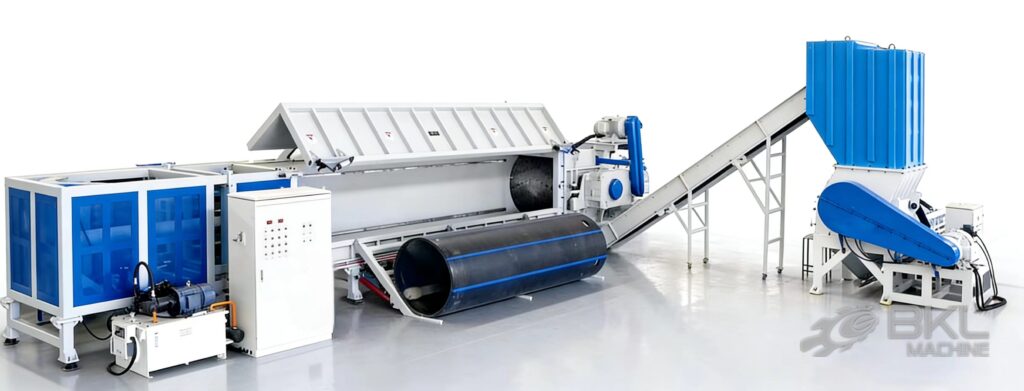
LPS single-rotor shredder for long pipes
Long-pipe shredder for PE pipes up to ⌀630 or ⌀1100, designed to reduce long profiles before downstream crushing or wash...
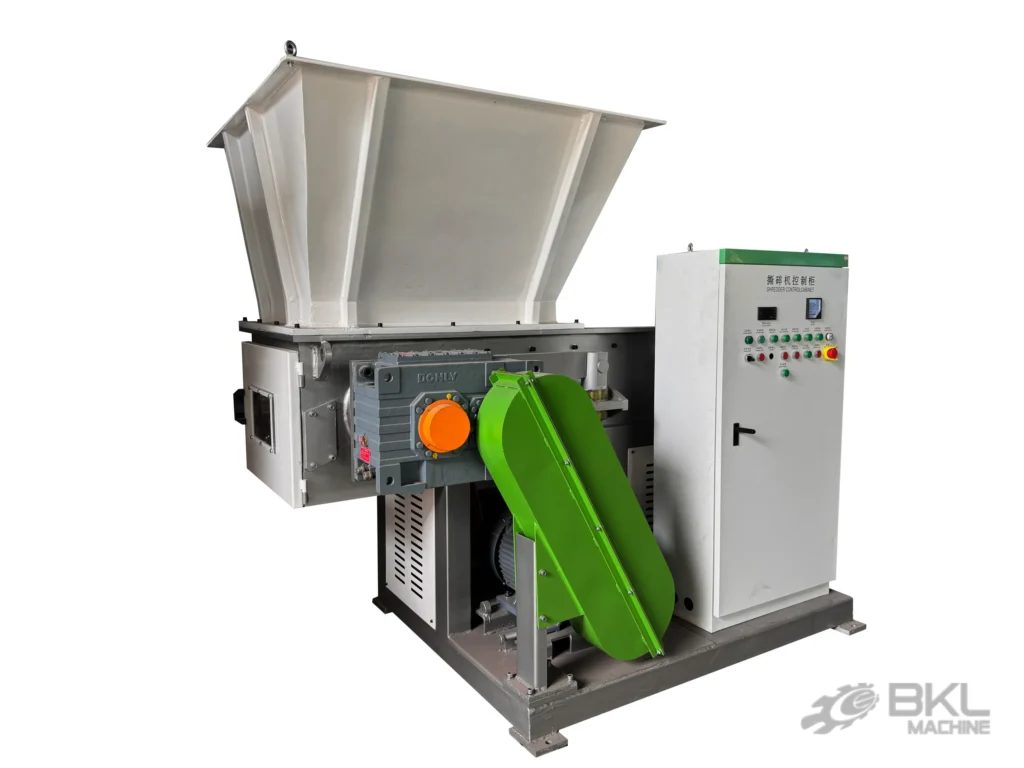
SS Single-Shaft Shredder (horizontal pusher)
Horizontal-pusher single-shaft shredder for plastic lumps, containers, pallets and packed waste where controlled rotor f...
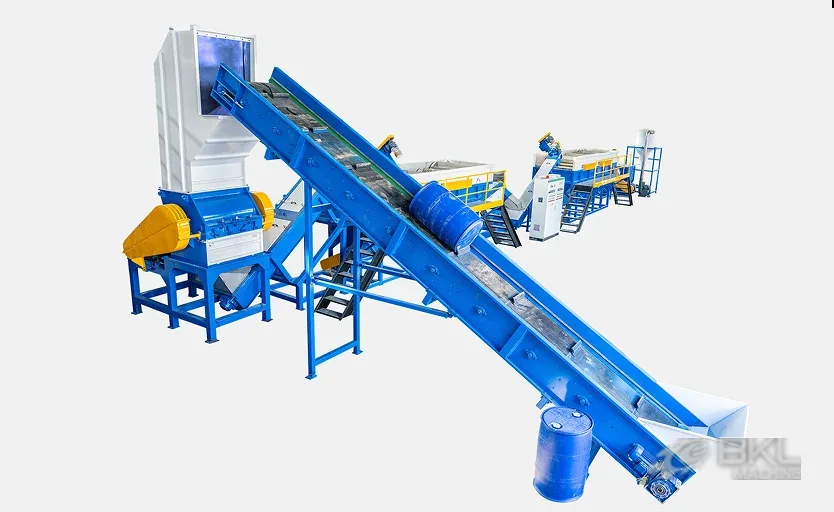
YPS Single-Shaft Shredder (swing-arm)
Swing-arm single-shaft shredder for PE film, bags and soft plastic waste, with Siemens PLC control and 500-2000 kg/h mod...