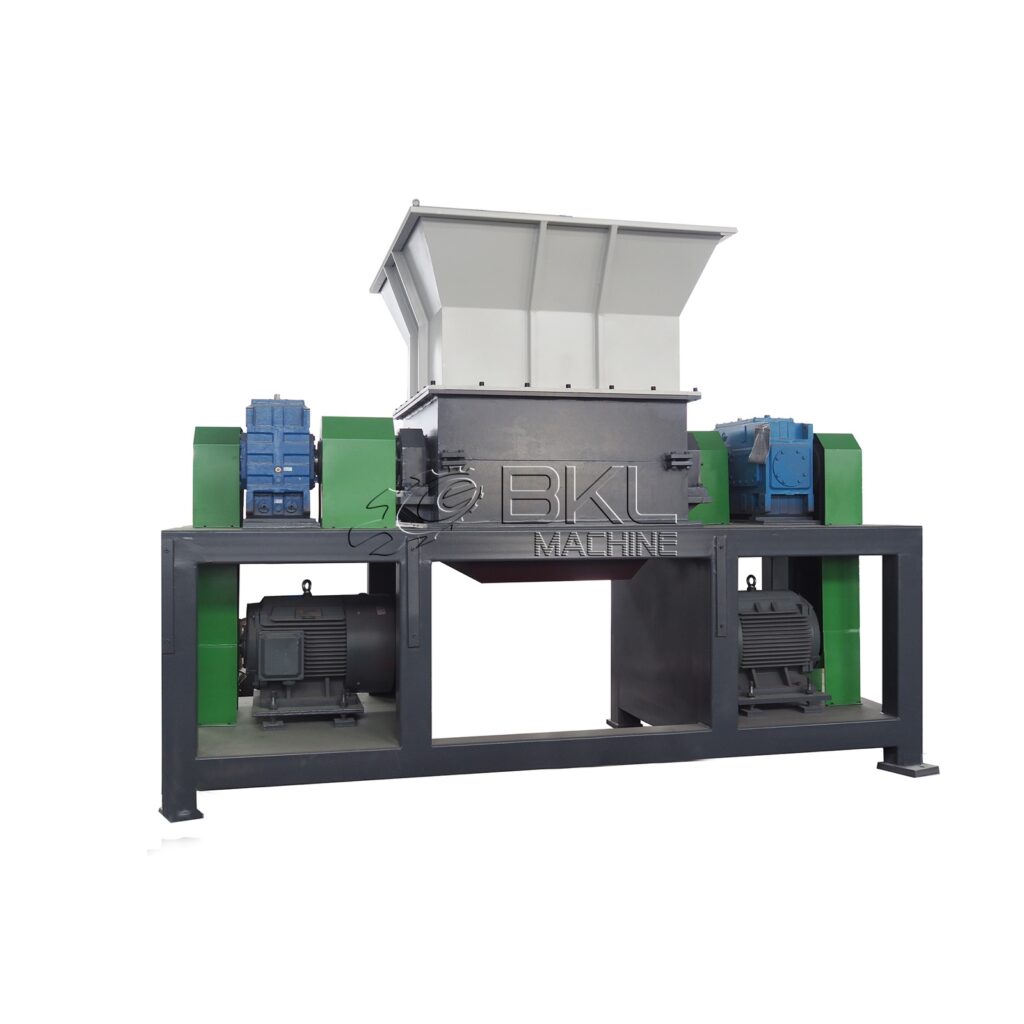
Tire Shredder for Scrap Tyre Size Reduction
Twin-shaft tire shredder application for rough scrap tyre size reduction. BKL covers the 50-150 mm shredding stage and clearly separates d...
View modelOpen a model for full specifications. If you are not sure which one your material points to, the questions further down narrow it faster than the spec tables do.
Twin-shaft tire shredder application for rough scrap tyre size reduction. BKL covers the 50-150 mm shredding stage and clearly separates d...
View model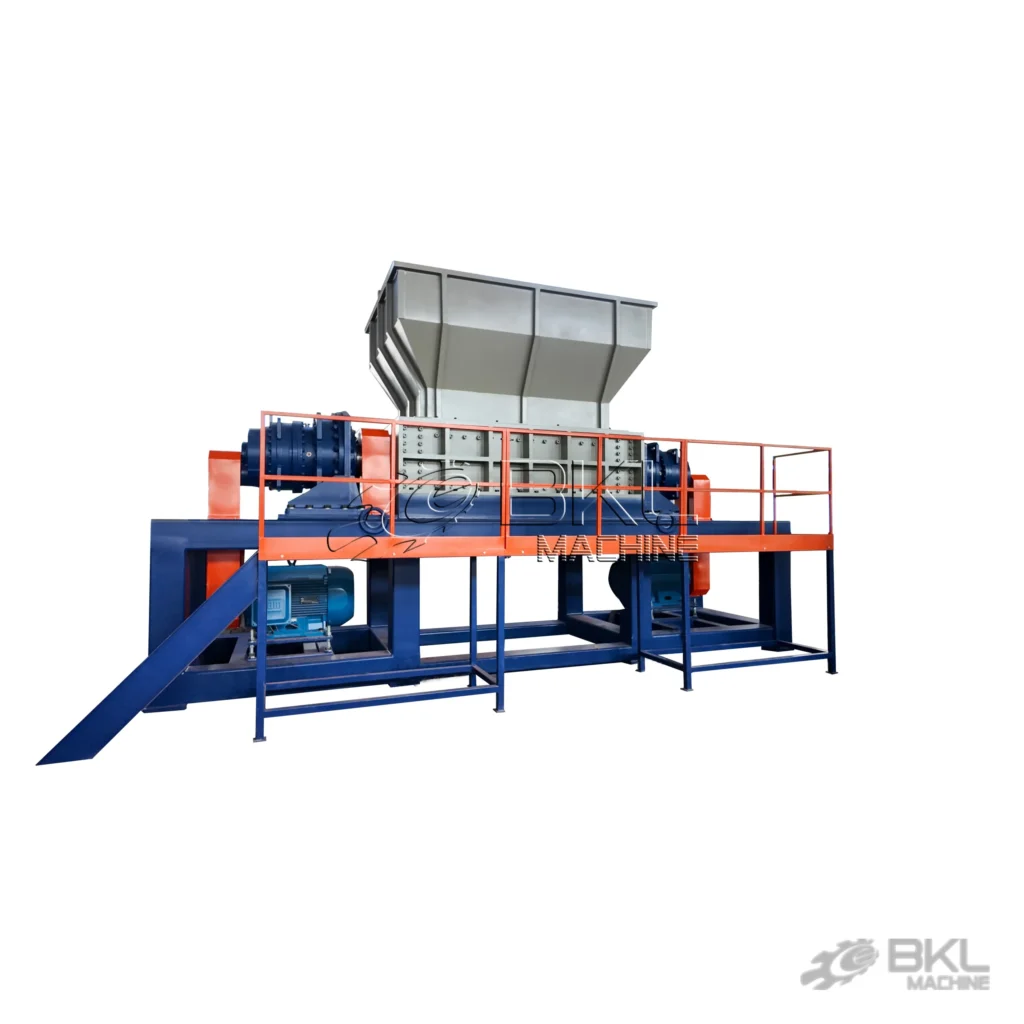
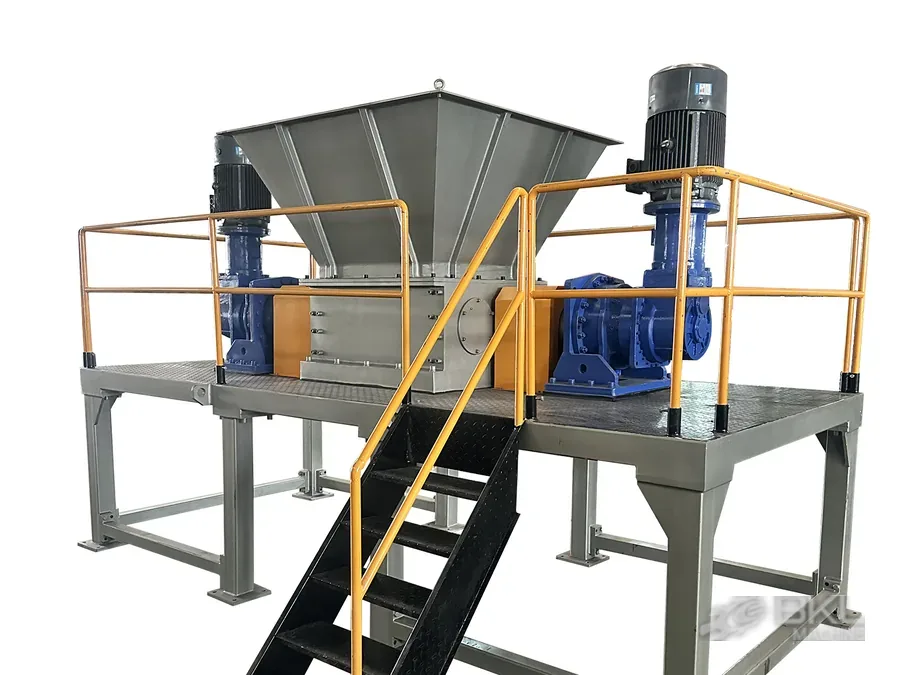
Low-speed twin-shaft shredder for bulky plastics, tyres, pallets and mixed waste, using Siemens PLC control and 8-15 rpm high-torque cutti...
View model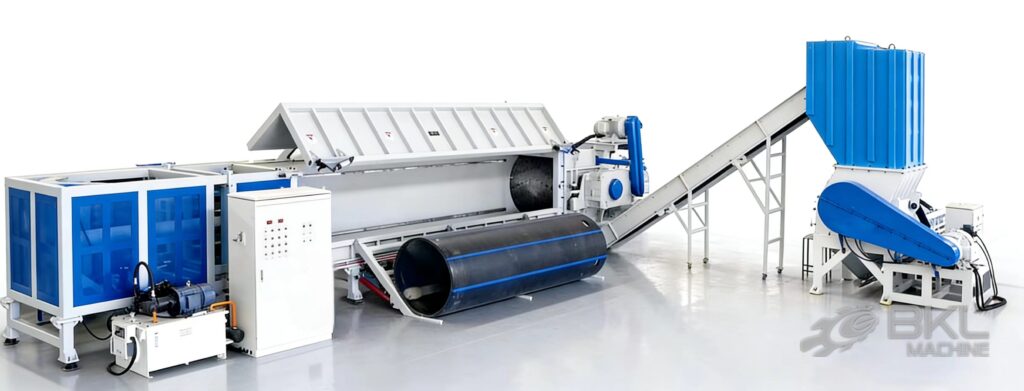
Long-pipe shredder for PE pipes up to ⌀630 or ⌀1100, designed to reduce long profiles before downstream crushing or washing.
View model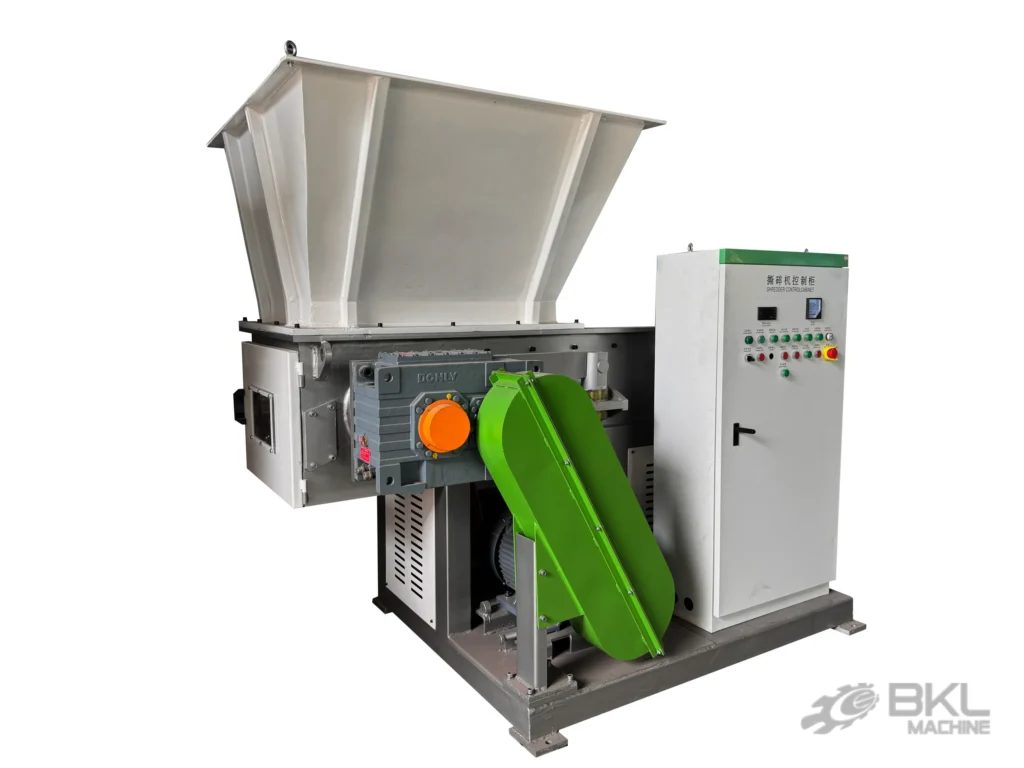
Horizontal-pusher single-shaft shredder for plastic lumps, containers, pallets and packed waste where controlled rotor feeding is required...
View model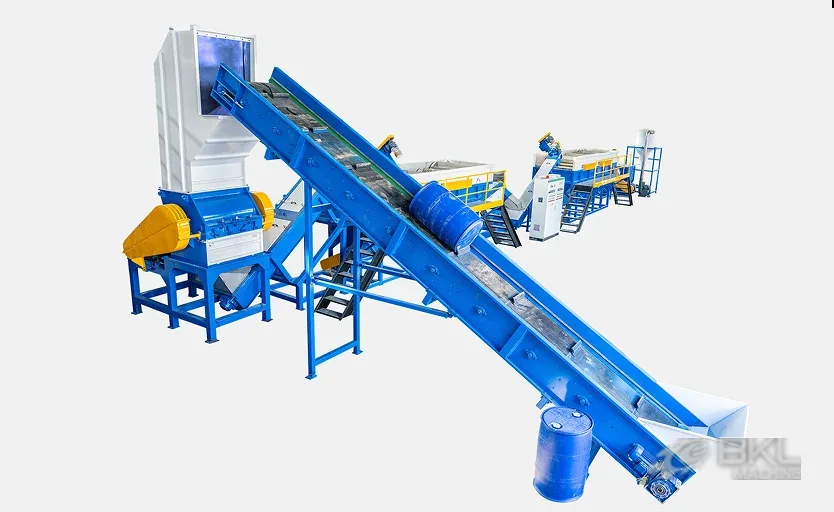
Swing-arm single-shaft shredder for PE film, bags and soft plastic waste, with Siemens PLC control and 500-2000 kg/h model range.
View modelThe same polymer can behave like cloth, a hollow vessel, a long beam or a dense lump. That geometry decides whether you need forced feeding, twin shafts, low-rpm torque, or a crusher afterwards.
Four things decide the answer here. Work through them in order and the model list gets short before anyone opens a spec table.
Light material bridges and rebounds, so the ram and hopper geometry matter as much as rotor power.
Rigid hollow scrap needs bite and controlled tearing before screen-controlled crushing.
Length control prevents whipping, jamming and unsafe manual pre-cutting.
Dense material loads the knives differently from baled film even at the same polymer.
A machine is only worth buying when its output matches what the next station needs. These are the four boundaries we check before quoting anything here.
Bales, drums, pipe, pallets, crates, purgings and mixed bulky scrap, loose or baled.
Piece size and shape, so nothing reaches the next machine that it cannot bite.
Coarse 30 to 150 mm pieces heading for a crusher, a wet granulator or a pre-wash tank.
Discharge piece size and whether unopened lumps still come through.
Shredding comes first whenever the waste is too large, too tough or too tangled for a crusher to swallow. A granulator with a 12 mm screen cannot take a 200 litre drum; it will bridge at the inlet, stall the rotor and wear the knives on the wrong part of the cut. The shredder exists to hand the next machine a particle it can process.
That is the whole logic of the order in a recycling line: shredding, then crushing and granulating, then washing, then pelletizing. Each stage narrows the particle and the next one refines it. If you are still working out how many of those stages your material needs, the plastic recycling machine line guide maps materials to layouts before machines.
Not every project needs shredding. Clean factory film coming off a blown film line goes straight to a compactor pelletizer. Loose bottles that already fit a crusher inlet do not need a shredder in front of them. Where shredding is genuinely required is bulky rigid items, baled material, full-length pipe and anything that tangles around a rotor.
Buyers usually ask how a shredder differs from a crusher and expect the answer to be size. It is not. It is rotor speed, and with it torque. Our four shredder series run across a tenfold speed range, and where a machine sits on that range decides what it can eat and how even the output is.
The slower the rotor, the more torque at the cutting edge, and the larger and harder the item it can shear instead of bounce around the chamber. The faster the rotor, the finer and more uniform the output, but the less tolerant the machine is of a whole drum arriving at the inlet. In English the word granulator generally refers to machines faster still, which is why a granulator cannot do a shredder job.
All four series run Siemens PLC control with automatic overload reversal, so a jam clears itself instead of needing an operator at an open guard.
These five decisions are made at the quotation stage and are expensive to change afterwards. Each one is a trade-off rather than a feature, so the right answer depends on your material and how well you can control what enters the hopper.
Both the SS and the YPS are single-rotor shredders running at almost the same speed, 72 and 74 rpm. What separates them is entirely how material is forced onto the rotor, and choosing the wrong one is the most frequent selection error we end up correcting.
Pipe is the one material where the shredder is chosen by geometry rather than by hardness. HDPE and PVC pipe arrives in lengths of six metres or more, and what makes it awkward on a recycling line is length, not toughness.
We do not publish shredder prices, because motor sizes, steel grades and rotor lengths differ per project and steel prices move underneath all of them. A figure written here would be wrong by the time you read it. What is stable is which variables move the number, and in which direction.
Once the warranty period ends, knives, screens and bearings are supplied at cost price, because a stalled line costs you more than the part does.
Two quotations for the same machine name can differ by a large margin. In this category the difference almost always comes from these three lines.
Full budgeting logic across a whole line, including which quotation lines are utilities and which are wear items.
Cost guideFour short answers are enough for an engineer to size this station properly. Without them any reply is a generic model list.
We will size the category from the process variable first, then recommend the model or station count that fits it.
What buyers ask our engineers most often about this station. If your question is not here, send the material description and we will answer it directly.
Ask an engineerRotor speed and torque, not size. Our shredders run between 8 and 74 rpm depending on series, so they shear whole items. A granulator or crusher runs far faster and cuts against a screen to produce controlled regrind, typically 8 to 16 mm. In a full line the shredder goes first and the granulator refines behind it.
Twin-shaft, at 8 to 15 rpm, for whole drums, pallets, bales and tyres, where torque is what you need. Single-shaft, at around 72 rpm with a hydraulic pusher, for lumps and offcuts where you need more even output. If your material is bulky film or woven bags, neither applies and the swing-arm YPS is the right machine.
Output is set by the screen aperture, typically 20 to 100 mm. A shredder is not the machine for fine particles. If you need 8 to 16 mm regrind, put a crusher behind the shredder rather than fitting an unnecessarily fine screen, which cuts throughput and raises power consumption per ton.
It depends on material and steel grade rather than on running hours. Clean plastic on 9CrSi runs a long time between sharpenings, while sand-laden agricultural film or tyres containing steel will wear even D2 or tungsten carbide much faster. We supply the knife and screen list with the order so you can plan the interval against your own material instead of a generic figure.
Occasional small metal is survivable with tungsten carbide knives and automatic overload reversal, which all four series have through their Siemens PLC control. Deliberately feeding metal-cored waste is a different question and needs discussing before the order, because it changes the knife specification and the wear budget.
Not with the LPS series. The LPS800 takes pipe up to 630 mm diameter and the LPS1200 up to 1,100 mm at full length, which removes the sawing operation entirely. On any other series pipe has to be cut to hopper length first, and that labour recurs on every ton you process.
Low rotor speed helps with both, which is one of the less obvious advantages of the twin-shaft machines. Enclosed chambers, discharge hoods and extraction on the conveyor handle the rest. Dust matters most on dry rigid material; on wet or film waste it is rarely the deciding issue.
Almost always, unless you are shredding into a bin and moving it with a forklift. A belt or screw conveyor to the next machine is what makes the line continuous, and it is also the natural place to fit magnetic separation. We put it in the layout rather than leaving it as an afterthought.
We do not publish a single figure, because the same nominal capacity can differ by a wide margin depending on three things: the hardest item that can reach the rotor, whether the feed needs a hydraulic ram, and whether a knife programme and spare set are included. Send the feed description and target kg/h and you get a scoped number rather than a range. The cost guide explains which lines a quotation is allowed to leave out.
It follows the contaminant, not the polymer. Clean plastic runs well on standard tool steel. Feed that can contain grit, stones or occasional metal needs a harder, more impact-resistant grade and accepts a shorter resharpening interval in exchange for surviving the hit. Ask any supplier for expected knife hours on your material and the resharpening cycle, because that number is the real cost, not the price of one blade set.
A twin-shaft shredder will physically open timber, cable and tyres, but the machine has to be specified for it from the start: heavier rotor, different knife geometry and proper overload protection. Running mixed bulky waste through a shredder sized for clean plastic is the most common way to lose a knife set early. For scrap tyres specifically we cover the 50 to 150 mm size-reduction stage — see the industrial shredder entry.
Industrial plastic scrap is shredded with a single-shaft or twin-shaft shredder, sized by the shape of the feed rather than the polymer. Twin-shaft machines suit drums, pipe, pallets and mixed bulky scrap; single-shaft machines with a hydraulic ram suit film, bales and lighter material that would otherwise bridge above the rotor. Domestic tools and general waste shredders are not built for the torque plastic requires.
Yes, but the value comes from the processing, not the scrap itself. Mixed, dirty, baled plastic is close to worthless at the gate. The same material shredded, washed and sold as clean flake reaches a usable resale grade, and as pellet it reaches a converter price. What each step is worth depends on your local market, so check what buyers near you pay for flake versus pellet before deciding how far down the line to invest.
This page covers one station. These three answer what comes before it, what a quotation should contain, and what the machines look like in service.